

If kale — that cold-hardy, leafy cruciferous veggie - ever got glam, purple kale would be it.
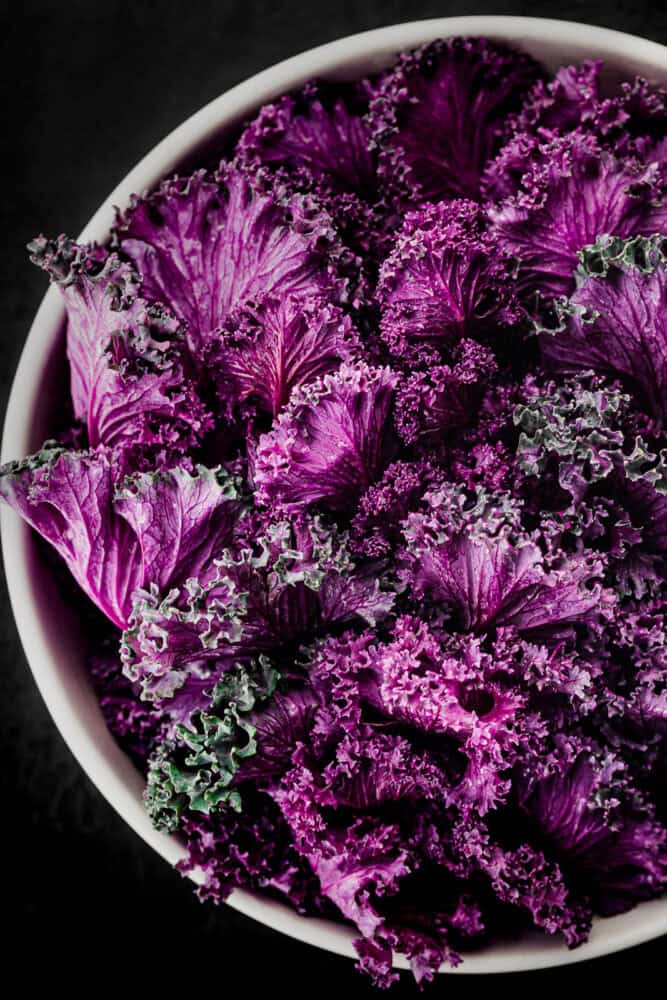
With leaves ranging from magenta and burgundy to deep violet, maroon, and blue-purple, purple kale brings serious color to the kitchen. And that color isn’t just pretty, it's a powerful antioxidant - anthocyanins. The stunning hue is beautiful and biologically beneficial.
Purple kale is the classic nutritional powerhouse - just with a purple makeover and an extra boost of antioxidants.
Kale itself has been cultivated for thousands of years, with origins stretching back to around 2000 BC in the Mediterranean and Asia Minor. While green kale has been in the United States since the 17th century, purple kale varieties arrived later, introduced to North America in the 19th century by Russian traders.

What is Purple Kale?
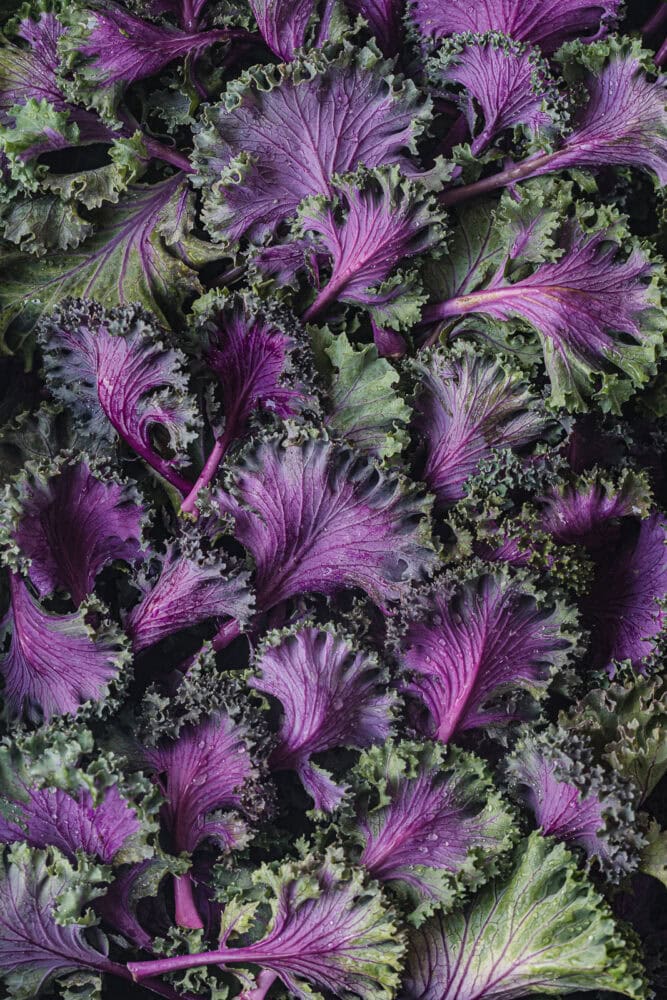
Purple kale is an umbrella term - a general name for kale varieties whose leaves have shades of purple, ranging from magenta and burgundy to deep violet, maroon, and blue-purple.
There are several varieties, with the most common being Redbor, Scarlet, and Red Russian.
Kale is a cruciferous vegetable and part of the Brassica oleracea (mustard) family - a cousin to broccoli, cabbage, and Brussels sprouts.
Kale itself has been cultivated for thousands of years, with origins stretching back to around 2000 BC in the Mediterranean and Asia Minor. Until the end of the Middle Ages, it was one of the most common green vegetables grown throughout Europe.
While green kale has been grown in the United States since the 17th century, purple kale varieties arrived later, introduced to North America in the 19th century by Russian traders.

Why is Purple Kale Purple?
Purple kale gets its vibrant color from anthocyanins - natural plant pigments that are also powerful antioxidants.
Anthocyanins are responsible for the red, purple, and blue tones found in fruits and vegetables like red okra, purple potatoes, and purple carrots.
There are nearly 2,000 known natural plant pigments, and about 640 of them are anthocyanins.
Because purple fruits and vegetables are rich in anthocyanins, they often contain higher levels of antioxidants than their non-purple counterparts. That stunning violet color brings both beauty and nutritional benefits.
The intensity of purple kale’s color can vary depending on growing conditions, especially the amount of sunlight the plants receive during cultivation.
Does Purple Kale Taste Different than Green Kale?
Compared to the classic green kale, purple kale tends to be slightly sweeter, a little earthier, and less bitter.
Flavor difference is noticeable. But subtle.
Popular Purple Kale Varieties
- Redbor Kale
- Red Russian Kale
- Purple Russian Kale
When is Purple Kale Season
Purple kale shares the same growing season as green kale.
It’s a cool-weather crop, with peak season running from fall through early spring.
Kale is grown worldwide and is widely available year-round, especially in places like California where it can be harvested throughout the year.
Cold temperatures actually improve kale’s flavor, making the leaves sweeter, more tender, and less bitter.
How to Cook Purple Kale
You can use purple kale in all the same ways you’d use green kale.
Just like green kale, purple kale is extremely versatile. Try it massaged into raw salads, sautéed with garlic, roasted into crispy chips, added to side dishes, sauces, pastas, smoothies and more.
Like other kale varieties, the leaves are fibrous.
Chef’s Tip: When eating kale raw, it helps to massage the leave with a little olive oil, lemon, or vinegar to soften them.
More Purple Fruits & Veggies
If purple Brussel sprouts caught your eye – you’re not alone. Purple veggies are kind of my love language. Check out these other preciously purple produce guides
- Purple Cauliflower – the vibrant, antioxidant-packed sibling of classic white cauliflower.
- Purple Potatoes – the antioxidant-rich members of the potato family.
- Purple Carrots – the original carrot, deeply purple and antioxidant-rich.
- Purple Brussel Sprouts – the sweeter, nuttier, antioxidant-rich cousin of the classic green sprout.
- Purple Asparagus – the sweetest, most tender spear of all.
- Radicchio – the vibrant purple veggie that brings bold color to winter cooking.
- Mulberries – the most ancient, anthocyanin-rich "berry" you're probably not eating.
If you spot purple kale, bring it home and play. And I’d love to see – tag me on Instagram, @danielagerson, so I can see your pretty purple kale creations.
There’s a whole wide world of colorful fruits and vegetables out there, and I hope this guide inspires you to play with more of them in the kitchen.
Let’s make waves in the kitchen.

Leave a Reply